
Quick Answer
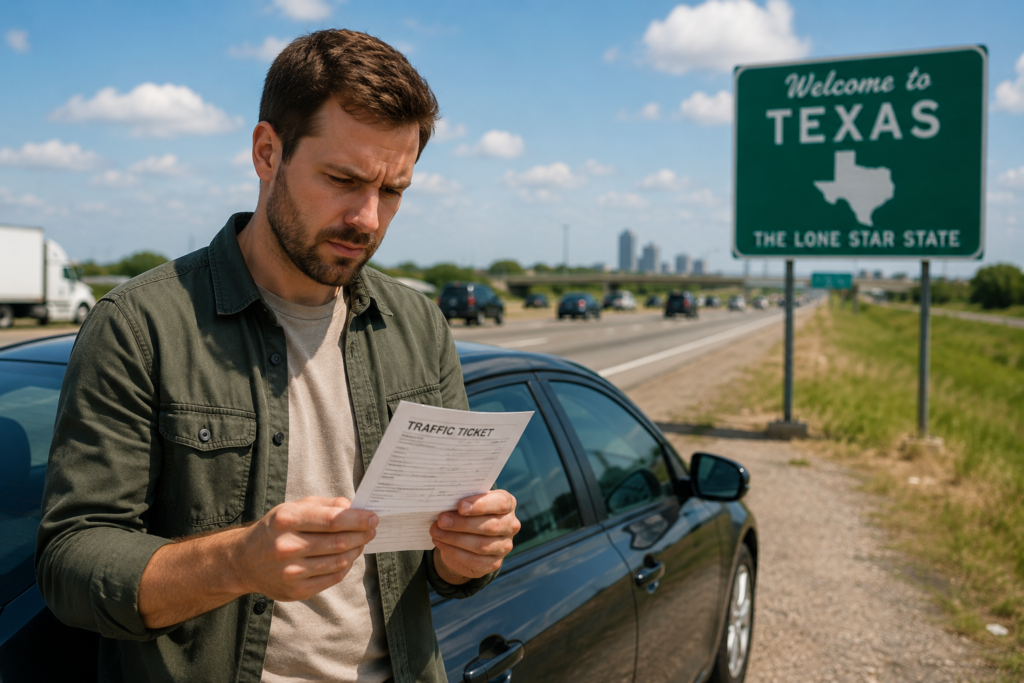
Not every traffic ticket in Texas will increase your car insurance premium.
In general, parking tickets and many non-moving violations don’t directly affect
your insurance because they usually aren’t added to your driving record.
However, moving violations—such as speeding, reckless driving, or running a
stop sign—are much more likely to increase your rates.
The exact impact depends on the type of violation,
your driving history, and your insurance company’s underwriting guidelines.
Introduction
Getting a traffic ticket can be stressful, especially if you’re worried about
higher insurance premiums. Fortunately, not every ticket affects your
car insurance in Texas. Some violations are considered administrative
or non-moving offenses and may never appear on the driving record
that insurance companies review.
Understanding the difference between moving and non-moving violations
can help you know what to expect after receiving a ticket. In this guide, you’ll learn
which tickets usually don’t affect car insurance in Texas, which violations are more
likely to increase your rates, and what steps you can take to protect your driving
record and learn what you can do to help keep your insurance premiums
as low as possible.
How Insurance Companies Decide
Whether a Ticket Affects Your Rates
Many drivers assume that every traffic ticket automatically increases their
insurance premium, but that’s not how car insurance works in Texas.
Insurance companies don’t simply look at whether you received a ticket.
Instead, they evaluate several factors, including the type of violation,
whether it appears on your driving record, your previous driving history,
and their own underwriting guidelines.
Moving Violations vs. Non-Moving Violations
One of the biggest factors is whether the ticket is considered
a moving violation or a non-moving violation.
Moving violations occur while a vehicle is in motion and generally
involve unsafe driving behavior. Common examples include:
- Speeding
- Running a stop sign or red light
- Failure to yield
- Reckless driving
- Improper lane changes
Because these violations may indicate a higher risk of future accidents,
they’re more likely to affect your insurance rates.
On the other hand, non-moving violations usually involve parking,
vehicle equipment, or administrative issues rather than the way a vehicle is driven.
Examples may include:
- Parking violations
- Expired registration
- Equipment-related violations
- Some fix-it tickets
These violations are generally less likely to increase insurance premiums,
although every situation is different.
Your Driving Record Matters
Insurance companies typically review your driving record, also known as your
Motor Vehicle Record (MVR), when calculating or renewing your policy.
If a violation doesn’t appear on your driving record, it often won’t directly
affect your insurance premium. However, this isn’t a guarantee.
Insurance companies have different underwriting rules,
and some violations may still be considered depending on the circumstances.
Every Insurance Company Uses Different Guidelines
There isn’t a single rule that applies to every insurer.
Some companies may overlook a minor violation, especially if you have
an otherwise clean driving history. Others may increase your premium after
a single moving violation. Factors such as previous claims, accidents,
the number of violations, and how recently they occurred can all influence your rate.
Understanding these differences can help you better evaluate the potential impact
of a traffic ticket and make informed decisions about your insurance coverage.
Which Tickets Usually Don’t Affect
Car Insurance in Texas?
While every insurance company has its own underwriting guidelines, some traffic
violations are generally less likely to increase your car insurance premium in Texas.
These are typically non-moving violations that don’t reflect unsafe driving behavior
and may not appear on the driving record insurers review.
Below are some of the most common examples.
1. Parking Tickets
Parking tickets are generally not reported to your driving record because they don’t
involve the operation of a moving vehicle. As a result, simply receiving a parking ticket
usually won’t increase your car insurance premium.
However, ignoring parking tickets can create other problems. Unpaid fines may lead to
additional penalties, collection actions, or other legal consequences depending on
the local jurisdiction.
Bottom line: Paying a parking ticket on time typically prevents it from becoming
a larger issue, but it’s still important to resolve it promptly.
2. Equipment Violations
Some tickets are issued because a vehicle doesn’t meet legal equipment requirements
rather than because of unsafe driving.
Examples include:
- Broken tail lights
- Defective brake lights
- Cracked windshield (when applicable)
- Faulty license plate light
- Missing mirrors or other required equipment
These violations are often considered equipment violations rather than moving
violations. In many cases, they are less likely to affect your insurance premium if
the issue is corrected promptly.
3. Fix-It Tickets
Some Texas law enforcement agencies may issue a fix-it ticket or allow certain
equipment violations to be corrected before additional penalties apply.
If you repair the problem within the required time and follow the court’s instructions,
the violation may have little or no effect on your insurance.
Keep in mind that procedures can vary depending on the court and the specific violation.
4. Vehicle Registration or Administrative Violations
Administrative violations generally involve paperwork rather than unsafe driving.
Examples may include:
- Expired vehicle registration
- Failure to display required registration documents
- Certain licensing or documentation issues
These violations don’t necessarily indicate that you’re a higher-risk driver.
However, repeated violations or failure to resolve them could lead to
additional legal consequences.
5. Window Tint Violations
Texas has specific laws regulating how dark vehicle window tint may be.
If your vehicle exceeds the legal tint limits, you may receive a citation.
In many situations, a window tint violation is considered an equipment-related
issue rather than a moving violation.
Correcting the problem and resolving the citation promptly may help minimize
any long-term consequences.
Important to Remember
Even when a ticket is generally considered a non-moving violation,
there is no guarantee that it will never affect your insurance.
Insurance companies evaluate risk differently, and your premium may
also depend on factors such as:
- Your overall driving history
- Previous accidents or claims
- Multiple violations within a short period
- Your insurer’s underwriting guidelines
If you’re unsure whether a specific ticket could affect your insurance,
it’s worth contacting your insurance company or speaking with
a licensed insurance agent.
Which Traffic Violations Are Most Likely to
Increase Your Insurance Rates?
Not every traffic ticket has the same impact on your insurance.
Moving violations that suggest unsafe driving behavior are
generally the most likely to increase your premium. Insurance companies
view these violations as indicators of a higher risk of future claims.
Below are some of the most common violations that may lead to higher
insurance rates in Texas.
Speeding Tickets
Speeding is one of the most common reasons drivers see an increase in their
insurance premium. The impact often depends on factors such as:
- How far over the speed limit you were driving
- Whether the violation occurred in a school or construction zone
- Your previous driving history
- Whether you’ve received multiple speeding tickets
A single minor speeding ticket may have a smaller impact than repeated
speeding violations.
Reckless Driving
Reckless driving is considered a serious moving violation because it involves
operating a vehicle in a manner that puts others at risk.
Insurance companies generally view reckless driving as a significant risk factor,
and it may result in substantially higher premiums.
Running a Stop Sign or Red Light
Failing to obey traffic signals or stop signs can increase the likelihood of an accident.
Because these violations involve unsafe driving behavior, they are more likely to
affect your insurance than non-moving violations.
Failure to Yield
Failure to yield is another moving violation that may lead to higher insurance costs,
especially if it results in a collision.
Insurance companies often consider this type of violation when evaluating future risk.
Improper Lane Changes and Unsafe Passing
Unsafe lane changes, improper passing, or other violations involving vehicle movement
may indicate careless driving.
Depending on the circumstances and your driving history, these violations can
contribute to higher insurance premiums.
DUI or DWI
Driving under the influence of alcohol or drugs is among the most serious
violations a driver can receive.
A DUI or DWI conviction may significantly affect both your insurance rates
and your ability to obtain coverage. Some insurers may even choose not
to renew your policy.
At-Fault Accidents
Although an accident isn’t technically a traffic ticket, it’s one of the biggest
factors that can affect your insurance premium.
If you’re found at fault for a crash, your insurer may consider you a higher-risk
driver, especially if the accident resulted in significant property damage or injuries.
Multiple Violations Matter More Than One
Insurance companies don’t evaluate tickets in isolation.
A driver with one minor violation and several years of safe driving may be viewed
very differently from someone who has received multiple citations within a short period.
Patterns of repeated violations often have a greater impact on insurance rates
than a single isolated incident.
| Traffic Violation | May Affect Insurance? | Typical Risk Level |
|---|---|---|
| Parking Ticket | Usually No | Low |
| Equipment Violation | Usually No | Low |
| Window Tint Violation | Usually No | Low |
| Speeding Ticket | Often Yes | Moderate |
| Running a Stop Sign | Often Yes | Moderate |
| Failure to Yield | Often Yes | Moderate |
| Reckless Driving | Very Likely | High |
| DUI / DWI | Very Likely | Very High |
| At-Fault Accident | Very Likely | Very High |
Special Situations That Often Cause Confusion
Not every traffic violation has a simple “yes” or “no” answer.
The outcome often depends on how the ticket is resolved, whether it appears
on your driving record, and your insurance company’s underwriting guidelines.
Below are several situations that commonly confuse Texas drivers.
Does a Seat Belt Ticket Affect Insurance?
A seat belt ticket is generally less likely to affect your insurance
than a moving violation such as speeding or reckless driving.
However, insurance companies don’t all evaluate violations the same way.
A seat belt ticket alone may not significantly increase your premium.
Repeated violations or additional risk factors could still influence
your overall insurance rate.
Bottom line: A seat belt ticket is usually less concerning than
most moving violations, but it should still be resolved promptly.
Do Red-Light Camera Tickets Affect Insurance?
Many drivers worry that a red-light camera ticket will automatically
increase their insurance premium.
Whether it affects your insurance depends on how the citation is handled
and whether it appears on the driving record reviewed by insurers.
Because enforcement practices have changed over time, it’s best to verify
how your citation is processed instead of making assumptions.
Can a Dismissed Ticket Affect Insurance?
If a traffic ticket is dismissed by the court, it generally won’t affect
your insurance because there is no conviction for the violation.
However, you should make sure the case has been officially closed
and all court requirements have been completed.
Does Defensive Driving Help?
Completing a state-approved defensive driving course may help eligible drivers
have a qualifying ticket dismissed or protect their driving record.
Eligibility depends on several factors, including:
- The type of violation
- Your driving history
- Court approval
- Texas eligibility requirements
What If You Receive Multiple Tickets?
Insurance companies usually review your overall driving history rather
than focusing on a single citation.
One minor ticket may have little effect, while several violations within
a short period may lead to higher insurance premiums.
Does an Unpaid Ticket Affect Insurance?
An unpaid ticket doesn’t automatically increase your insurance premium.
However, failing to resolve a citation can result in additional fines,
court action, or problems affecting your driving privileges.
Resolving the ticket as soon as possible is usually the best approach.
Key Takeaway
A traffic ticket doesn’t always affect your insurance premium.
Insurance companies also consider your driving history, whether the violation
appears on your driving record, and their own underwriting guidelines.
If you’re unsure how a ticket may affect your policy, review your driving
record or speak with a licensed insurance agent.
What to Do After Receiving a Traffic Ticket in Texas
Receiving a ticket does not always mean your insurance will increase.
The steps you take afterward may help protect your driving record.
Read the Ticket Carefully
Check the violation, court information, deadline, and available response options.
Never assume paying the fine is your only available choice.
Paying a ticket may be treated as accepting responsibility for the violation.
Contact the listed court if any information seems unclear or incorrect.
Respond Before the Deadline
Do not ignore the ticket or miss the response deadline.
Failure to respond may lead to additional fines or court-related consequences.
Texas may also deny license renewal for unresolved qualifying citations.
Ask Whether Defensive Driving Is Available
Some eligible drivers may qualify for a state-approved defensive driving course.
Completing the course may allow a qualifying citation to be dismissed.
Eligibility depends on the violation, driving history, and court approval.
Always receive permission from the court before enrolling in the course.
Consider Deferred Disposition
Some Texas courts offer deferred disposition for eligible traffic violations.
You must usually meet specific requirements during a probationary period.
After successful completion, the court may dismiss the violation.
Eligibility rules and fees vary from one Texas court to another.
Contest an Incorrect Ticket
You may contest a citation if you believe it was issued incorrectly.
Collect photographs, documents, witness statements, and other supporting evidence.
More serious cases may require advice from a qualified traffic attorney.
Correct Equipment Problems Quickly
Repair broken lights, registration issues, or other equipment violations promptly.
Keep receipts and documents showing the repairs were completed.
The court may request this evidence before reducing or dismissing charges.
Check Your Texas Driving Record
Review your driving record to confirm which violations currently appear there.
Keep copies of dismissal notices and other important court documents.
This information may help if questions arise during policy renewal.
Contact Your Insurance Agent Carefully
Your insurance agent can explain how similar violations are often evaluated.
However, every insurance company uses its own underwriting guidelines.
The final premium depends on your complete driving history.
Avoid Reducing Coverage Automatically
A higher premium may tempt you to lower your insurance coverage.
Less coverage could leave you paying much more after an accident.
Compare discounts and quotes before reducing your protection limits.
Keep Driving Safely
One minor ticket may have only a small effect on your premium.
Repeated violations usually have a much greater impact over time.
Maintaining a clean driving record is one of the best ways
to keep your insurance costs lower.
Frequently Asked Questions About Tickets and
Car Insurance in Texas
How Long Does a Ticket Affect Car Insurance in Texas?
A ticket may affect your premium for several years afterward.
The exact period depends on your insurer and driving history.
More serious violations may influence rates longer than minor tickets.
Insurers also consider accidents and other recent driving-related incidents.
Will One Speeding Ticket Increase My Insurance Rate?
One speeding ticket does not always cause an immediate increase.
Your insurer considers speed, driving history, and previous violations.
A minor first ticket may have little or no impact.
Repeated or serious speeding violations are more likely to raise premiums.
When Will My Insurance Company Discover the Ticket?
Insurance companies may review your record when renewing the policy.
They may also check it when you request coverage changes.
Your rate may not increase immediately after receiving the citation.
The change could appear during your next policy renewal.
Can I Keep a Ticket Off My Driving Record?
Some eligible tickets may be dismissed through defensive driving courses.
Deferred disposition may also help in certain qualifying court cases.
Both options generally require approval from the court handling your citation.
Never assume enrollment alone will keep the ticket off-record.
Does a Warning Affect Car Insurance?
A written or verbal warning usually is not a conviction.
Therefore, it generally does not affect your car insurance rate.
However, warnings may sometimes remain within law enforcement agency records.
They normally do not appear as convictions on driving records.
Will Changing Insurance Companies Hide My Ticket?
Changing insurers will not remove violations from your driving record.
A new company may review your record before offering coverage.
Different insurers may calculate the same violation in different ways.
Comparing quotes may help you find a more affordable premium.
Can My Insurance Company Cancel Coverage After a Ticket?
One minor ticket usually does not cause immediate policy cancellation.
Multiple serious violations may make renewal more difficult or expensive.
DWI, reckless driving, or repeated violations create greater insurance risk.
Your insurer may increase rates or decline the next renewal.
Should I Tell My Insurance Company About a Ticket?
You usually do not need to report every minor ticket immediately.
However, you must answer insurance application questions honestly and accurately.
Your insurer may discover the violation during a driving-record review.
Providing false information could create problems with your insurance coverage.
Final Thoughts
Not every traffic ticket in Texas will increase your insurance premium.
Much depends on the type of violation, your driving history,
and your insurance company’s underwriting guidelines.
Parking tickets and many non-moving violations are generally
less likely to affect your rates.
Moving violations, repeated offenses, and serious convictions
are much more likely to increase your insurance costs.
If you receive a ticket, review your options before paying it.
In some situations, defensive driving or deferred disposition
may help protect your driving record.
Maintaining safe driving habits remains one of the most effective
ways to keep your insurance premiums as low as possible.
Need Help Understanding Your Insurance Options?
If you’ve recently received a traffic ticket and aren’t sure
how it may affect your auto insurance, speaking with
a licensed insurance agent can help.
An experienced agent can review your situation,
compare available coverage options,
and help you find a policy
that fits both your needs and your budget.
Need help choosing the right coverage?
Speak with a licensed insurance agent.