
Quick Answer
If you operate a truck for business in Texas, you’ll likely need commercial truck insurance.
Whether you’re an owner-operator, independent contractor, or manage a fleet, the right policy
helps protect your business from accidents, lawsuits, cargo losses, and costly repairs.
Texas requires minimum liability insurance for commercial vehicles, but most trucking businesses
need additional coverage such as physical damage, cargo insurance, bobtail insurance,
non-trucking liability, and trailer interchange insurance.
Choosing the right commercial truck insurance policy can protect your livelihood
while helping you stay compliant with state and federal regulations.
Key Takeaways
- Commercial truck insurance is required for most business-operated trucks in Texas.
- Coverage varies depending on whether you’re an owner-operator, leased driver,
or motor carrier. - Liability insurance is only the beginning—many trucking businesses also need cargo,
physical damage, and trailer coverage. - FMCSA regulations may require higher liability limits for interstate trucking.
- The cost of commercial truck insurance depends on the truck, cargo, driving history,
operating radius, and coverage limits. - Comparing multiple insurance quotes can help reduce premiums without sacrificing protection.
What Is Commercial Truck Insurance?
Commercial truck insurance is a specialized type of business insurance designed to protect
trucks used for commercial purposes. Unlike personal auto insurance, it covers vehicles that
transport goods, equipment, or materials as part of a business.
Whether you own one pickup truck for your contracting business or operate multiple
semi-trucks across state lines, commercial truck insurance helps cover financial losses
after accidents, property damage, theft, vandalism, lawsuits, and other unexpected events.
Many truck owners assume a personal auto policy is enough. In most cases, it isn’t.
Once a vehicle is used primarily for business purposes, personal insurance may deny claims,
leaving the owner responsible for thousands—or even hundreds of thousands—of dollars in damages.
Commercial truck insurance is designed for businesses such as:
- Owner-operators
- Long-haul trucking companies
- Local delivery services
- Construction contractors
- Landscapers
- Moving companies
- Freight carriers
- Food distributors
- Utility contractors
- Courier businesses
Even if your business owns only one truck, commercial coverage may still be
required depending on how the vehicle is used.
Who Needs Commercial Truck Insurance?
Not every truck owner needs a commercial policy, but many Texas businesses do.
You may need commercial truck insurance if you:
- Transport cargo for customers
- Operate under your own USDOT or MC number
- Lease your truck to a motor carrier
- Own a dump truck, box truck, tow truck, or semi-truck
- Use a pickup truck for contracting, construction, plumbing, electrical work,
or landscaping - Deliver products or equipment for your business
- Operate multiple commercial vehicles
For example, a contractor using a heavy-duty pickup every day to transport tools
and equipment may need commercial insurance, even if the truck looks like
a regular personal vehicle.
Likewise, owner-operators hauling freight across Texas or throughout the
United States often need several different insurance policies to meet contract
and regulatory requirements.
Commercial truck insurance isn’t just about meeting legal requirements—it’s about
protecting your business from financial risks that could otherwise shut it down
after a single accident.
What Does Commercial Truck Insurance
Cover?
Commercial truck insurance isn’t a single type of coverage. Instead, it’s a package
of policies that protect different parts of your business. Depending on how you operate,
you may need only the basic required coverage—or a combination of several policies.
Understanding what each type of coverage does can help you avoid expensive
surprises after an accident.
Liability Insurance
Liability insurance is the foundation of every commercial truck policy and is required
for most commercial vehicles operating in Texas.
If you’re responsible for an accident, liability insurance helps pay for:
- Injuries to other people
- Damage to someone else’s vehicle
- Damage to buildings, fences, or other property
- Legal defense costs and settlements (within policy limits)
If you operate across state lines, federal regulations may require significantly higher
liability limits depending on what you’re transporting.
Keep in mind that liability insurance does not pay to repair your own truck.
It only covers damage you cause to others.
For most trucking businesses, liability insurance is only the starting point.
Physical Damage Coverage
Accidents don’t only happen to other drivers. Your own truck is often your
biggest business investment.
Physical Damage Coverage helps pay to repair or replace your truck if it’s damaged by:
- A collision
- Fire
- Theft
- Vandalism
- Falling objects
- Hail or windstorms
- Flooding
- Animal collisions
Unlike liability insurance, this coverage protects your own vehicle.
For example, if your parked semi-truck is damaged during a Texas hailstorm or stolen
from a truck stop, Physical Damage Coverage may help cover repair or replacement
costs after your deductible.
Many lenders also require this coverage if your truck is financed.
Motor Truck Cargo Insurance
If you’re hauling freight for customers, protecting the cargo is just as important
as protecting the truck.
Motor Truck Cargo Insurance helps cover the value of goods being transported
if they’re damaged, destroyed, or stolen during transit.
Covered losses may include:
- Traffic accidents
- Vehicle rollovers
- Fire
- Theft
- Cargo damage during transportation
- Certain weather-related incidents (depending on the policy)
Different cargo types have different insurance requirements.
For example:
- Refrigerated food
- Electronics
- Furniture
- Construction materials
- Medical equipment
may each require different coverage limits or endorsements.
Without cargo insurance, you could be responsible for replacing thousands—or
even hundreds of thousands—of dollars worth of freight.
Bobtail Insurance vs. Non-Trucking Liability
Insurance
These two coverages are often confused because both apply when a truck
isn’t hauling a trailer. However, they protect you in different situations.
Bobtail Insurance
Bobtail Insurance covers your truck when you’re driving without a trailer,
typically while traveling between jobs or returning after a delivery.
For example, after dropping off a loaded trailer, you’re driving your tractor
to pick up the next load. During that trip, you’re involved in an accident.
Bobtail Insurance may provide liability protection if your primary policy
doesn’t apply.
Non-Trucking Liability Insurance
Non-Trucking Liability (NTL) covers personal use of a commercial truck
when you’re off duty and not conducting business.
For example, you drive your tractor to a restaurant or grocery store
while you’re off the clock. If you’re involved in an accident, Non-Trucking
Liability Insurance may help cover your liability.
Although the names sound similar, these policies are designed for different
situations. Many leased owner-operators are required by their motor
carrier to carry one or both types of coverage.
Trailer Interchange Insurance
If your business hauls trailers that belong to someone else, Trailer Interchange
Insurance may be essential.
Many trucking companies exchange trailers while transporting freight. If a trailer
you’re using is damaged by a collision, fire, theft, vandalism, or another covered
event, the owner may hold you financially responsible.
Trailer Interchange Insurance helps pay for repairs or replacement of non-owned
trailers while they’re in your care, custody, or control.
This coverage is commonly required for:
- Owner-operators
- Contracted drivers
- Freight carriers
- Trucking companies working with multiple shippers
It’s important to understand that this insurance protects the trailer itself—not
the cargo inside it. Cargo insurance is a separate policy.
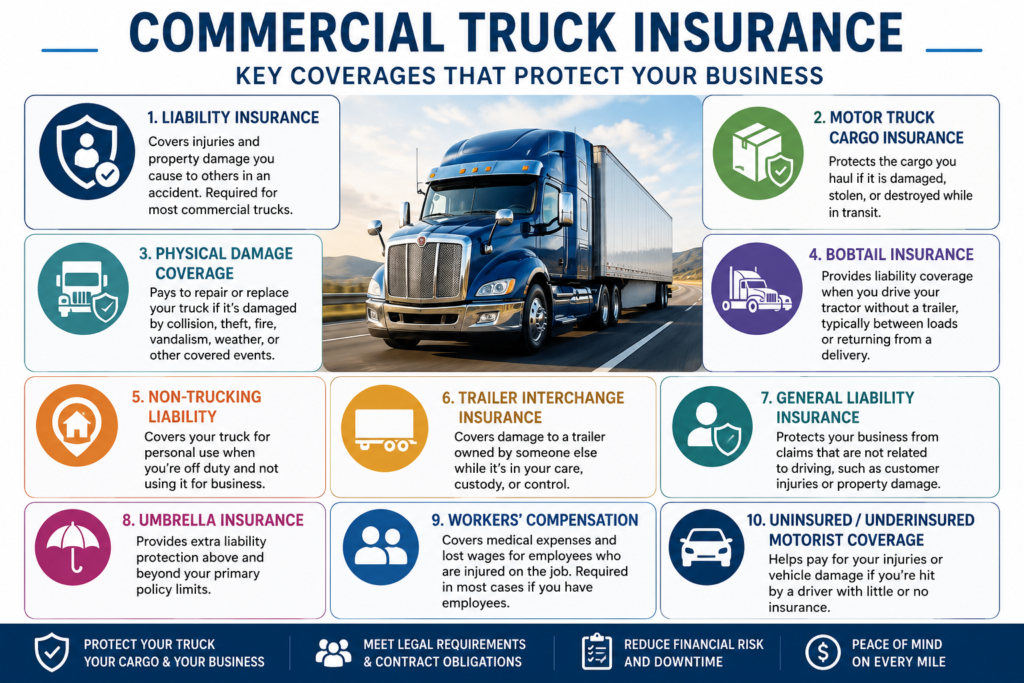
Figure 1. Overview of commercial truck insurance coverages commonly available for Texas trucking businesses.
General Liability Insurance
While commercial truck insurance protects you on the road, General Liability
Insurance protects your business in many situations that have nothing
to do with driving.
For example, it may provide coverage if:
- A customer slips and falls at your office.
- Your employee accidentally damages a client’s property while
making a delivery. - Your business is sued for advertising or personal injury claims.
- You attend trade shows or business events and accidentally
cause property damage.
General Liability Insurance is especially valuable for trucking companies that have
offices, warehouses, maintenance facilities, or employees working outside the truck.
Many commercial contracts also require proof of General Liability coverage
before they’ll do business with you.
Umbrella Insurance
Serious truck accidents can result in damages far exceeding the limits of a standard
liability policy.
Umbrella Insurance provides an additional layer of financial protection after your primary
liability limits have been exhausted.
Imagine your commercial liability policy covers up to $1 million, but a lawsuit results
in $2 million in damages. Without umbrella coverage, your business could be
responsible for the remaining balance.
Umbrella Insurance may help cover:
- Large bodily injury claims
- Major property damage
- Court judgments
- Legal defense costs beyond primary policy limits
For trucking companies that transport valuable cargo or operate multiple vehicles,
umbrella coverage can provide valuable financial security.
How Much Does Commercial Truck Insurance
Cost in Texas?
One of the most common questions business owners ask is:
“How much does commercial truck insurance cost?”
The answer depends on several factors, so there’s no single price that
fits every business.
Your premium may vary based on:
- The type of truck you drive
- The truck’s value
- Your driving history
- Years of commercial driving experience
- Type of cargo transported
- Annual mileage
- Operating radius
- Number of trucks insured
- Coverage limits
- Deductible amount
- Claims history
As a general rule, owner-operators often pay less than larger trucking companies
with multiple drivers and vehicles. However, transporting hazardous materials or
operating long-haul routes can significantly increase premiums.
Because every trucking operation is different, obtaining personalized quotes from
experienced insurance professionals is often the best way to find the right
balance between coverage and cost.
What Affects Your Insurance Premium?
Insurance companies evaluate risk before determining your premium.
Some of the biggest factors include:
Driving Record
Drivers with clean records typically qualify for lower premiums,
while multiple accidents or traffic violations can increase insurance costs.
Vehicle Type
A heavy-duty semi-truck usually costs more to insure than a light-duty
commercial pickup because repair costs and potential liability are higher.
Cargo
Certain types of freight—such as hazardous materials, refrigerated products,
pharmaceuticals, or high-value electronics—carry greater financial risk and
may require specialized coverage.
Operating Radius
Local delivery businesses often have different risk profiles than companies
transporting freight across several states.
Experience
Insurance companies generally view experienced commercial drivers more
favorably than newly licensed operators.
Safety Programs
Businesses that invest in driver training, vehicle maintenance, GPS tracking,
dash cameras, and other safety measures may qualify for better insurance rates.
Choosing the lowest premium isn’t always the best decision. The right policy
should provide adequate protection for your business, your equipment,
and your financial future—especially when one serious accident could
have long-term consequences.
How to Choose the Right Commercial Truck Insurance
Every trucking business is different, which means there’s no one-size-fits-all
insurance policy.
When comparing commercial truck insurance, don’t focus only on the price.
The cheapest policy isn’t always the best value if it leaves important risks uncovered.
Before purchasing coverage, consider the following questions:
- What type of truck do you operate?
- Do you drive locally or across state lines?
- What kind of cargo do you transport?
- Do you own your truck or lease it?
- Will you need cargo, bobtail, or trailer interchange coverage?
- Do you have employees or multiple drivers?
- What liability limits are required by your contracts or the FMCSA?
An experienced insurance agent can help identify the coverage your
business actually needs while avoiding policies that include unnecessary protection.
The goal is to protect your business—not simply meet the minimum legal requirements.
Common Mistakes to Avoid
Many truck owners unintentionally leave themselves exposed because they
misunderstand what their policy covers.
Some of the most common mistakes include:
Buying only the minimum required liability coverage
Minimum coverage may satisfy legal requirements but often isn’t enough
to protect your business after a serious accident.
Assuming personal auto insurance is enough
If your truck is used for business, a personal auto policy may deny a claim.
Forgetting about cargo coverage
Without Motor Truck Cargo Insurance, you may have to reimburse customers
for damaged or stolen freight out of your own pocket.
Choosing coverage based only on price
Lower premiums often mean lower coverage limits or important exclusions.
Not reviewing your policy regularly
As your business grows, your insurance needs may change. Adding new trucks,
hiring drivers, or expanding into new states may require updating your policy.
Why Work With an Independent Insurance
Agency?
Commercial truck insurance isn’t just about buying a policy—it’s
about finding coverage that fits your business.
An independent insurance agency works with multiple insurance
carriers rather than representing only one company. This allows you
to compare coverage options, policy limits, and pricing from different insurers.
An experienced agent can help you:
- Compare quotes from multiple carriers
- Understand policy exclusions
- Meet state and federal insurance requirements
- Find coverage that fits your business and budget
- Update your policy as your company grows
Whether you’re an owner-operator or manage a fleet of trucks, working
with an independent agency can make the insurance process simpler
and more efficient.
Final Thoughts
Commercial truck insurance is one of the most important investments
for any trucking business.
The right policy protects more than just your truck—it helps safeguard
your income, your equipment, your employees, your customers, and your future.
From liability and cargo insurance to physical damage and trailer interchange
coverage, every policy should be tailored to the way your business operates.
If you’re unsure what coverage you need, speaking with a knowledgeable
insurance professional can help you make informed decisions and avoid
costly gaps in protection.
Protecting your business today can save you from significant financial
losses tomorrow.
Need Commercial Truck Insurance in Texas?
Whether you operate one truck or manage an entire fleet, choosing the right insurance
can help protect your business from unexpected risks.
Our team can help you compare coverage options from multiple insurance carriers and
find a policy that fits your needs.
Contact a licensed Texas insurance agent today for a personalized
commercial truck insurance quote.
Frequently Asked Questions (FAQ)
Is commercial truck insurance required in Texas?
Yes. Most businesses that operate trucks for commercial purposes are required
to carry commercial insurance. The minimum coverage depends on the type of
vehicle, how it’s used, and whether it operates only within Texas or across state lines.
How is commercial truck insurance different from personal
auto insurance?
Personal auto insurance is designed for privately owned vehicles used for personal
activities. If your truck is primarily used for business, hauling cargo, or transporting
equipment, you’ll likely need commercial truck insurance. A personal policy may
not cover business-related claims.
Who needs commercial truck insurance?
Commercial truck insurance is commonly needed by:
- Owner-operators
- Independent truck drivers
- Trucking companies
- Contractors
- Landscapers
- Delivery businesses
- Moving companies
- Construction companies
- Freight carriers
- Businesses using commercial pickup trucks
Does commercial truck insurance cover cargo?
Not automatically.
Cargo protection is provided through Motor Truck Cargo Insurance, which is
usually purchased as separate coverage. It helps protect the goods you’re
transporting if they’re damaged, stolen, or destroyed during transit.
What is Bobtail Insurance?
Bobtail Insurance provides liability coverage when you’re driving your tractor
without a trailer, typically between loads or after completing a delivery.
It does not replace your primary commercial liability policy.
What is Non-Trucking Liability Insurance?
Non-Trucking Liability Insurance helps protect owner-operators while using
their commercial truck for personal, non-business purposes.
For example, if you’re driving your tractor to a restaurant or home while
off duty, this coverage may apply.
What factors affect the cost of commercial truck insurance?
Insurance companies consider several factors, including:
- Driving history
- Commercial driving experience
- Type of truck
- Truck value
- Cargo type
- Annual mileage
- Operating radius
- Coverage limits
- Deductible amount
- Claims history
- Number of drivers and vehicles
Can I insure just one commercial truck?
Absolutely.
Many owner-operators and small businesses insure a single truck.
Commercial truck insurance isn’t only for large fleets.
Does commercial truck insurance cover weather damage?
If you have Physical Damage Coverage, your policy may help cover damage
caused by events such as:
- Hail
- Windstorms
- Flooding
- Fire
- Falling objects
- Theft
- Vandalism
Coverage depends on your policy and deductible.
Is commercial truck insurance tax deductible?
In many cases, insurance premiums paid for business purposes may be
deductible as an ordinary business expense. However, tax situations vary,
so it’s best to consult a qualified tax professional or CPA regarding your
specific circumstances.
Can I get commercial truck insurance if I have accidents
on my driving record?
Yes. While previous accidents or traffic violations may increase your premium,
many insurance companies offer coverage for drivers with less-than-perfect
driving histories. An independent insurance agency can often help compare
options from multiple carriers.
How often should I review my commercial
truck insurance policy?
You should review your policy at least once a year or whenever your business
changes—for example, if you:
- Purchase another truck
- Hire additional drivers
- Expand into new states
- Transport different types of cargo
- Increase the value of your equipment
Regular policy reviews help ensure your coverage keeps pace with your business.
Commercial Truck Insurance Coverage Comparison
| Coverage Type | What It Covers | Required? |
|---|---|---|
| Liability Insurance | Pays for injuries and property damage you cause to others in an accident. | Yes (required for most commercial trucks) |
| Physical Damage Coverage | Repairs or replaces your truck after collisions, theft, fire, vandalism, hail, flood, or other covered events. | No (often required by lenders) |
| Motor Truck Cargo Insurance | Covers cargo that is damaged, stolen, or destroyed while being transported. | Sometimes (often required by shippers or contracts) |
| Bobtail Insurance | Provides liability coverage when driving a tractor without a trailer between jobs. | Sometimes (often required for leased owner-operators) |
| Non-Trucking Liability Insurance | Covers personal use of a commercial truck while off duty and not under dispatch. | Sometimes |
| Trailer Interchange Insurance | Covers damage to a trailer owned by someone else while it’s in your possession. | Sometimes (required under many trailer interchange agreements) |
| General Liability Insurance | Covers business-related claims that don’t involve driving, such as customer injuries or property damage. | No (often required by contracts) |
| Uninsured/Underinsured Motorist Coverage | Helps pay for your injuries or vehicle damage if you’re hit by a driver with little or no insurance. | Optional in many cases, but highly recommended |
| Medical Payments (MedPay) | Helps cover medical expenses for you and your passengers after a covered accident, regardless of fault. | Optional |
| Workers’ Compensation | Covers medical expenses and lost wages for employees injured on the job. | Depends on your business and state requirements |
| Umbrella Insurance | Provides additional liability protection after your primary policy limits are exhausted. | Optional (recommended for businesses with higher risk) |
Pro Tip
Not every trucking business needs every type of coverage.
For example:
- An owner-operator may need Liability, Physical Damage, Cargo, and Bobtail Insurance.
- A local contractor using a commercial pickup truck may only need Commercial Auto
Liability and Physical Damage Coverage. - A trucking company with multiple drivers and trailers often benefits from additional
protection such as General Liability, Trailer Interchange, Workers’ Compensation, and
Umbrella Insurance.
The right combination of coverages depends on your truck, the type of freight you haul,
where you operate, and the specific risks your business faces.